If you develop and operate commercial real estate, you have likely experienced the disconnect.
Development teams track budgets in one system. Asset managers monitor lease-up in another. Property management handles operations separately. Finance reconciles everything at the end of the month.
The handoff from construction to stabilization often feels like starting over.
This is where integrated real estate management becomes more than a technology upgrade. It becomes a structural advantage. When development, leasing, finance, and operations operate inside a unified platform, data flows instead of getting rebuilt. That continuity reduces reporting errors, lowers operational friction, and improves investment visibility.
For commercial real estate firms across the USA managing office, retail, industrial, or mixed-use portfolios, integrated systems are increasingly replacing fragmented workflows.
Let’s examine why.

In traditional workflows, development and operations function as separate environments.
During construction, teams track:
Once an asset stabilizes, operations take over. Lease data is entered into a new system. Financial projections are rebuilt. Capital expenditure tracking shifts again.
Each transition introduces risk.
When information is re-entered across systems, discrepancies occur. A tenant improvement allowance may not match the original construction budget. Operating projections may not align with development assumptions.
Over time, this fragmentation creates:
Integrated real estate management eliminates these duplicate data entry points. Development assumptions carry forward into stabilized operations without rebuilding models from scratch.
Integrated real estate management is not simply software that stores documents. It is a connected framework that links development tracking, lease administration, asset management, and financial reporting in one environment.
In practice, this means:
Instead of separate silos, the asset lifecycle is continuous.
For commercial operators managing multiple assets, this continuity improves decision-making across acquisitions, refinancing, and long-term hold strategies.
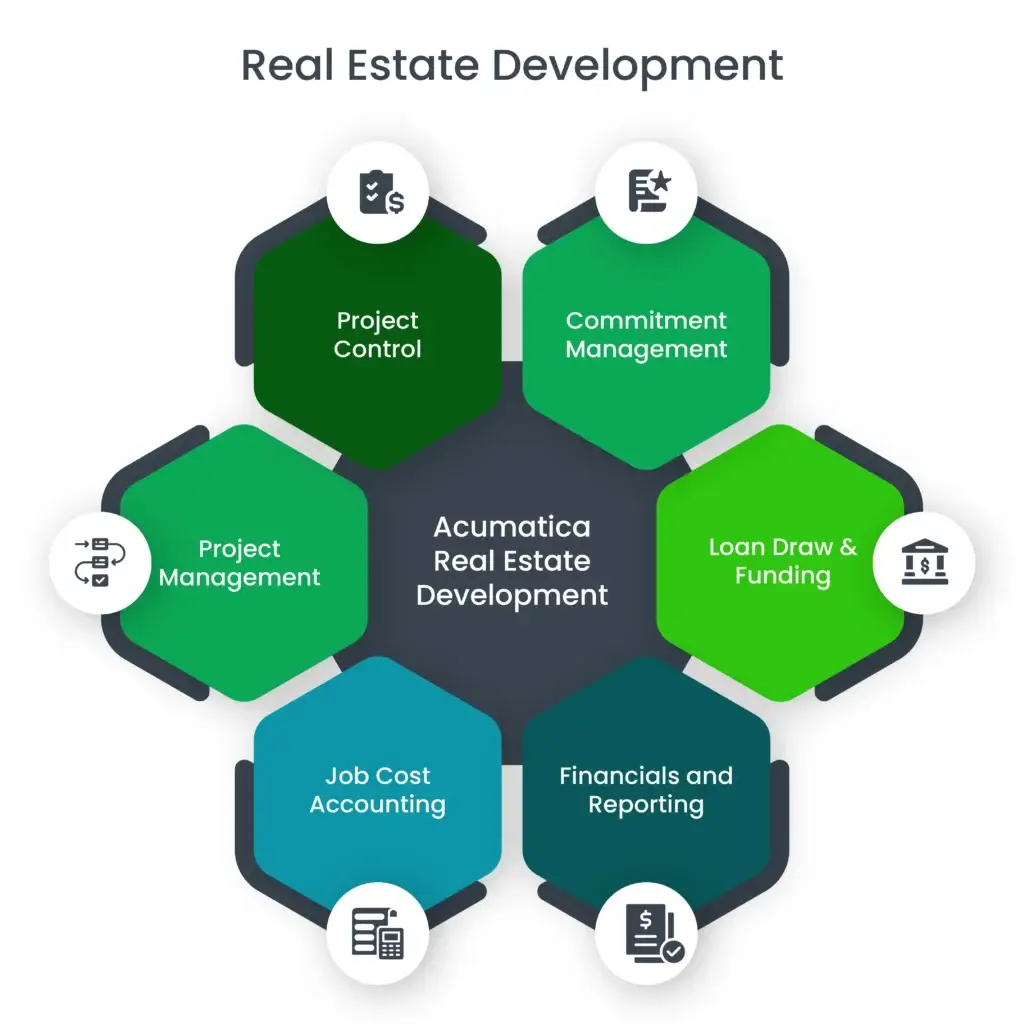
Development carries uncertainty. Construction delays, cost overruns, and leasing timelines all affect projected returns.
With integrated real estate management, project budgets, lease commitments, and financing structures live inside one system. As conditions change, forecasts update automatically.
Leadership can assess exposure in real time rather than waiting for manual reconciliations.
Once a building transitions into operations, lease performance directly impacts NOI, debt service coverage, and investor reporting.
Disconnected systems require finance teams to manually align rent rolls with financial statements. Integrated real estate platforms connect lease data directly to reporting models.
That reduces errors and increases confidence when presenting performance to lenders or equity partners.
Capital expenditures do not stop at stabilization. Roof replacements, tenant improvements, and repositioning projects continue throughout ownership.
Integrated real estate management tracks capital activity alongside asset performance. Development teams and asset managers work from the same data set, improving long-term capital allocation decisions.
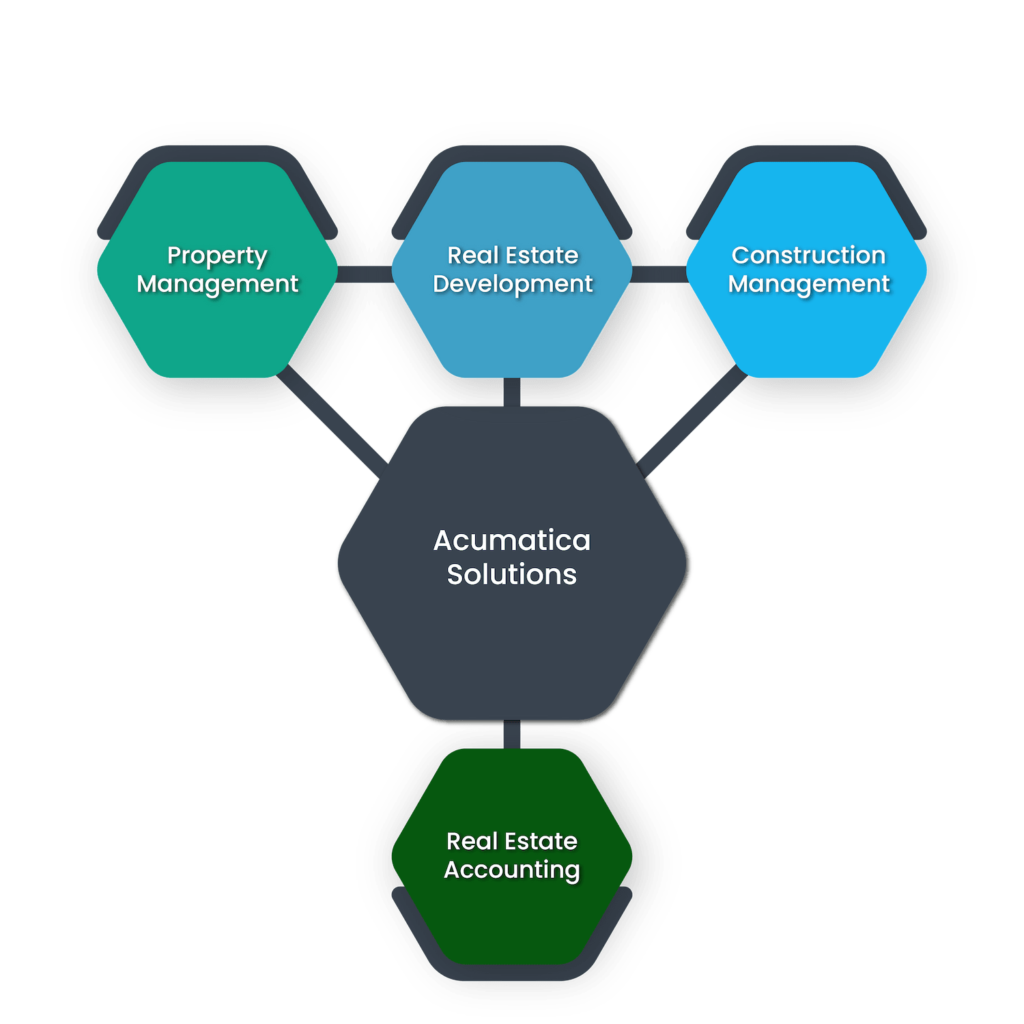
Commercial real estate involves multiple stakeholders. Development managers, property managers, asset managers, accounting teams, and executive leadership all rely on consistent information.
When each department operates in separate tools, internal friction increases.
Integrated real estate management introduces shared visibility and structured workflows. Teams understand how their decisions affect the broader portfolio.
For example:
This coordination reduces delays and supports more disciplined growth.

Regulatory requirements, lender scrutiny, and investor expectations have increased in recent years.
Fragmented systems make it harder to maintain accurate, audit-ready data.
Integrated real estate management strengthens governance by centralizing data and maintaining structured audit trails. When changes occur, they are documented within the system rather than buried in email threads or spreadsheet revisions.
For firms seeking institutional capital or managing large portfolios, this level of transparency supports long-term credibility.

Platforms like Elevate Solutions are designed to support the full asset lifecycle rather than a single function.
Instead of treating development and operations as separate phases, Elevate connects:
This alignment reduces duplicate workflows and preserves historical assumptions throughout the asset’s life.
For commercial real estate firms managing multiple projects and stabilized assets simultaneously, integrated real estate management through systems like Elevate provides operational continuity rather than patchwork solutions.
Many firms adopt integrated systems only after operational strain becomes visible.
Common warning signs include:
By the time these challenges appear, inefficiencies are already embedded in daily workflows.
Integrated real estate management is most effective when implemented proactively, before scale introduces complexity that is difficult to unwind.
Commercial real estate does not operate in phases. Development decisions influence operational performance for years.
If your organization still rebuilds data when assets transition from construction to stabilization, it may be time to evaluate whether integrated real estate management can provide stronger continuity.
A focused review of how development, leasing, and finance interact inside your current systems can quickly reveal where cost and risk accumulate. Exploring a platform like Elevate may help determine whether your infrastructure is aligned with the scale and sophistication your portfolio demands.
Integrated real estate management connects development tracking, lease administration, property management, and financial reporting within one structured system. Instead of separate software tools for each department, data flows continuously across the asset lifecycle. For commercial real estate firms, this reduces manual data entry and improves reporting consistency. Integrated platforms ensure that construction budgets, lease agreements, and operating performance remain aligned, improving forecasting accuracy and reducing operational risk.
Development risk often stems from limited visibility into budgets, leasing timelines, and financing assumptions. Integrated real estate management allows leadership to monitor construction costs, tenant commitments, and projected returns in one environment. When delays or cost changes occur, financial projections update automatically. This improves decision-making and reduces surprises during stabilization. For US-based developers working with lenders and equity partners, consistent reporting strengthens confidence throughout the project lifecycle.
While large institutional portfolios benefit greatly from integration, mid-sized commercial operators also gain value. Even managing a few complex assets can create fragmentation between development and operations. Integrated platforms streamline workflows and improve capital tracking regardless of portfolio size. As firms grow, having infrastructure already in place prevents costly system transitions later.
Investors require transparency and reliable projections. Integrated real estate management consolidates lease data, operating expenses, and capital activity into standardized reports. Because data originates from one system, reporting discrepancies decrease. Platforms like Elevate allow finance teams to produce consistent performance summaries without rebuilding spreadsheets each month. This strengthens investor relationships and simplifies audit processes.
Over time, integration improves forecasting accuracy, capital allocation discipline, and operational efficiency. Commercial real estate firms gain clearer visibility into lease exposure, rollover risk, and capital needs. Integrated real estate management supports better acquisition analysis and refinancing preparation because historical data remains structured and accessible. The result is improved strategic planning and reduced operational friction across the portfolio.
Standard features include real-time budget tracking, forecasting, commitment management, reporting dashboards, and system integrations.
We use cookies to improve your experience on our site. By using our site, you consent to cookies.
Manage your cookie preferences below:
Essential cookies enable basic functions and are necessary for the proper function of the website.
These cookies are needed for adding comments on this website.
Google reCAPTCHA helps protect websites from spam and abuse by verifying user interactions through challenges.
Google Tag Manager simplifies the management of marketing tags on your website without code changes.
Statistics cookies collect information anonymously. This information helps us understand how visitors use our website.
Google Analytics is a powerful tool that tracks and analyzes website traffic for informed marketing decisions.
Service URL: policies.google.com (opens in a new window)
You can find more information in our Cookie Policy and .

Imagine a single commercial property management software platform to develop and manage the end-to-end daily operations of all your real estate assets.