Most property management software is a property management application. Acumatica is a cloud ERP platform that property management runs on top of.
That sounds like a distinction without a difference until you own an asset you also developed, or self-perform a tenant improvement build, or hold land for a future phase. Then it becomes the difference between one dataset and four systems that have to be reconciled.
This article covers what Acumatica is, how property management works on it, and which firms the architecture suits.
What is Acumatica?
Acumatica is a cloud ERP platform: a single system covering financials, project accounting, distribution and industry-specific functionality, with the modules sharing one database rather than exchanging data through integrations.
For real estate, the relevant components are the financial management core, the project accounting and job costing layer, and the construction functionality documented in Acumatica’s construction and general contractor accounting materials. Property management capability is built on that foundation rather than sitting alongside it.
The architectural point matters more than the feature list. When project costing and property accounting share a database, a construction project posting to a property entity is one transaction rather than an export, a mapping and an import.
Why does the platform architecture matter for CRE operators?
It depends entirely on what your firm does. For a firm that only operates stabilised assets and never builds, a dedicated property management application is a reasonable choice and the ERP argument carries little weight.
The argument gains force with every additional function the firm performs.
You develop assets you go on to operate
A development project accumulates cost in a project structure. At completion it becomes an operating asset. On separate systems, the asset is created fresh in the property books and the cost history, vendor relationships and document trail stay behind. On a shared platform, the record continues.
You self-perform tenant improvements or capital works
TI projects need job costing: budgets, commitments, change orders and a split between landlord allowance and tenant contribution. They also need to post to the correct property entity and feed the lease record that authorised the allowance. Running the project in a construction tool and the billing in a property tool means reconciling the two monthly.
You hold multiple entities with layered ownership
Multi-entity accounting with automated intercompany elimination is standard ERP functionality and a common gap in dedicated property applications. Where consolidation is manual, close time grows faster than the portfolio does.
You need one financial picture
Development in progress, stabilised operations and capital projects reported together, without assembling the view from three exports.
What does property management look like on Acumatica?
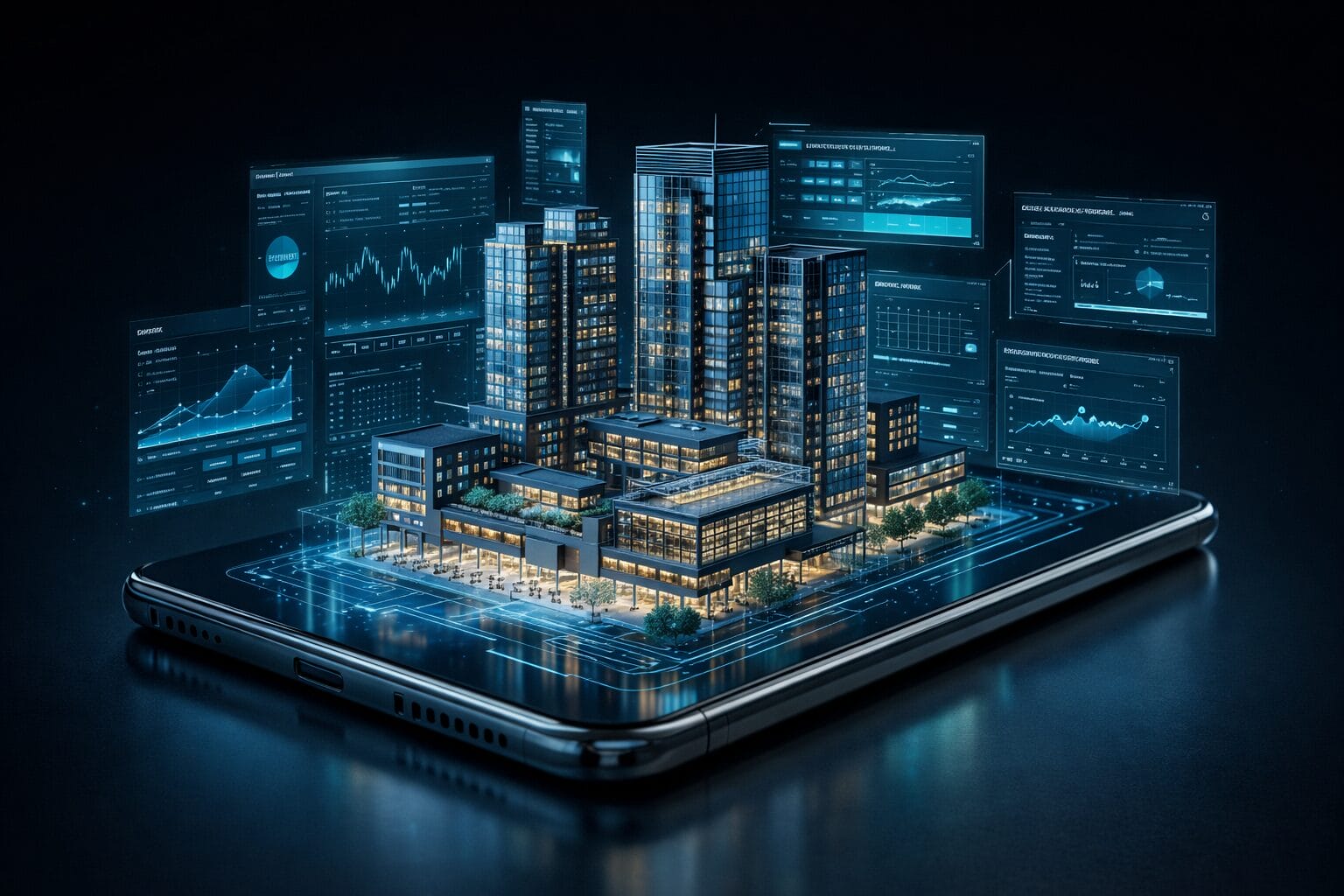
Elevate builds commercial property management functionality on the Acumatica platform. The property-specific capabilities cover the operational layer while the ERP core handles the financial one.
Lease administration
Gross, triple-net, modified gross and percentage rent structures held as structured lease data, with automated critical date tracking, escalations and renewal notifications driving billing directly from the lease terms.
CAM and expense recovery
Recoverable expense tracking with automated allocation across tenants, gross-up calculations, caps and exclusions applied per lease, and lease-level review before reconciliation statements are finalised.
Multi-entity property accounting
Separate books per ownership entity with automated intercompany transactions and consolidated portfolio reporting, produced from the system rather than assembled in spreadsheets.
Capital and tenant improvement costing
Improvement projects tracked with budgets, commitments and actuals through the project accounting layer, separating owner and tenant obligations while posting to the correct property entity.
Maintenance and vendor management
Work orders from request to resolution, preventive maintenance scheduling, and vendor compliance tracking, with maintenance cost feeding expense recovery without re-entry.
Tenant and owner portals
Self-service access to statements, payments, maintenance requests and documents for tenants, and rent roll and financial visibility for owners.
The commercial property management software overview covers the operational detail.
The licensing model and why it affects adoption
Acumatica licenses on resource consumption rather than per user. In practice, this means unlimited users with no per-seat fees.
This is usually presented as a pricing advantage, which undersells it. The more consequential effect is on system adoption.
Per-seat pricing creates a standing incentive to limit access. Property managers, maintenance coordinators, field staff and junior accounting team members get left off the licence to control cost. Those people still need the information, so they get it through exports, emails and spreadsheets maintained outside the system.
Once that happens, the single-dataset benefit is gone. The spreadsheets become the working record for the people doing the daily work, and the system becomes the place where results are recorded afterwards. Removing the per-seat cost removes the reason to work that way.

What does implementation involve?
Elevate’s typical implementation runs eight to twelve weeks depending on portfolio complexity. The work covers data migration from existing systems, chart of accounts and entity structure configuration, lease abstraction, integration with systems being retained, workflow setup and role-based training.
Two variables drive the timeline more than the software does.
Lease abstraction. Getting lease terms into structured form is manual judgement work on any platform. Volume, complexity and current format determine how long it takes.
Chart of accounts and entity structure. Decisions made here govern reporting for the life of the system, including how recoverability is captured and how entities consolidate. Rushing this is the most expensive shortcut available.
Which firms does this architecture suit?
It suits firms whose work crosses the boundary between building and operating.
A developer that holds and operates its completed assets. An owner-operator that self-performs capital works and tenant improvements. A firm running land, construction and stabilised operations concurrently across a layered entity structure. In each case the alternative is several systems and a permanent reconciliation burden between them.
It suits less well a firm that purely operates a small stabilised portfolio in a single entity, never builds, and has no development pipeline. That firm is buying capability it will not use, and a focused property management application may serve it better. Being straightforward about that is more useful than claiming universal fit.
Evaluating the platform
Ask to see the boundary cases rather than the core workflows, because the core workflows work on every serious platform.
- Show me a completed development project becoming an operating asset, with its cost history intact.
- Run a tenant improvement project with job costing and show it posting to the property entity and the lease.
- Show consolidated financials across several ownership entities with intercompany transactions.
- Run a CAM reconciliation with a base year, a cap and a negotiated exclusion.
- Show me development in progress and stabilised operations in one financial view.
If those five work on live data, the architecture argument is real. If they require exports, it is a claim rather than a capability.
Elevate is an Acumatica Gold Certified Partner founded by CPAs, with nearly 40 years working with commercial property managers, developers and construction firms. Book a 20-minute discovery call to see the platform on live portfolio data.