
Lease administration software is the system a commercial landlord uses to store lease terms, track critical dates, bill rent escalations and CAM recoveries, and post every tenant charge to the general ledger. Elevate runs commercial lease administration on Acumatica cloud ERP, so leases, tenant ledgers and property accounting share one database instead of separate spreadsheets.
Built on Acumatica and used by owners, operators and controllers across the US.
New Book
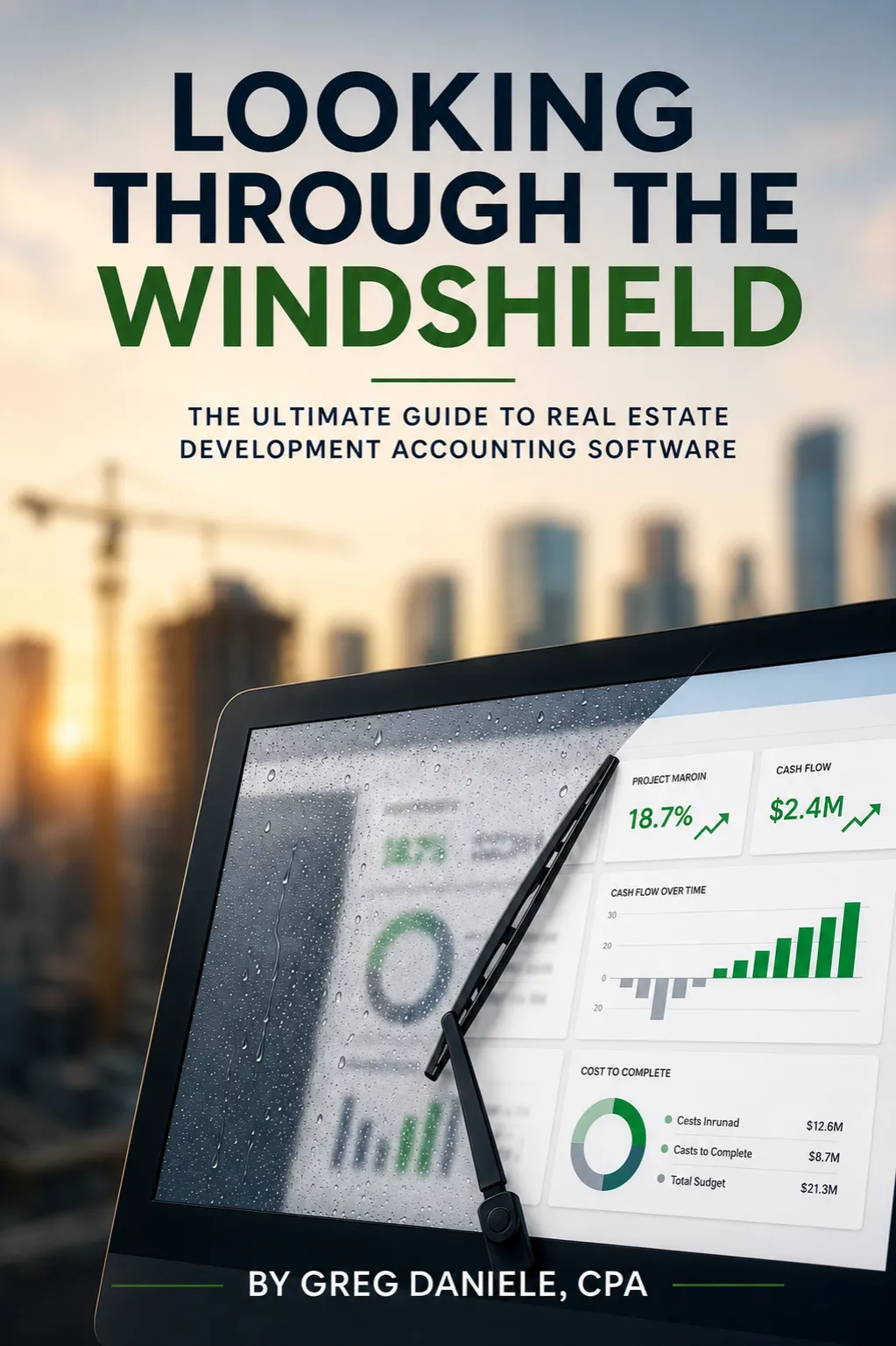
Looking Through the Windshield — the ultimate guide to real estate development accounting software. By Greg Daniele, CPA.

Acumatica gold certified partner
“We have visibility across our entire portfolio now. Draw requests that used to take days are down to almost an hour.”
CFO,
Real Estate Development Firm
“We used to hunt for answers. Now they’re just there. Real-time lot tracking and cost control mean we see issues coming before they become problems.”
VP of Finance,
Land Development Company
“We consolidated three systems into one and cut our month-end close time in half. Everything’s in one place: property management, CAM recovery and tenant improvements. It’s been a game changer for our operations.”
Controller,
Property Management Company
typical implementation
users — no per-seat fees
A commercial lease can run to dozens of pages, but the accounting team works from a small set of terms: commencement and expiration, the base rent schedule, renewal and termination options, the security deposit, and the tenant’s share of operating expenses. Lease abstraction pulls those terms into structured fields, so answering a basic question about a tenant no longer means reopening the PDF.
Critical dates are the other half of the abstract. Option notice windows, expirations, rent change dates and co-tenancy or kick-out deadlines are easy to miss when they live in one person’s calendar or a shared spreadsheet. Keeping them with the lease record makes them visible to everyone who works on the property.
Elevate keeps lease records inside the same Acumatica platform as your property accounting. On a discovery call we review the abstract fields and date list you track today and show how they would be stored and reported in your environment.
Acumatica’s lease administration within the property management module includes complete lease abstracts, critical date tracking and option tracking for every commercial lease. Abstract every commercial lease once and track every term that matters, including renewal, termination, expansion and right-of-first-refusal options. Add custom fields for anything unique to your leases. Acumatica tracks critical dates and alerts your team before every expiration, renewal deadline and option notice date.
Rent rarely stays flat for the life of a commercial lease. Fixed bumps, CPI-based increases, free rent periods, percentage rent, and base-year or expense-stop structures all change what a tenant owes, and each change has to take effect on the right date with an audit trail behind it.
CAM is where the detail piles up. Operating expenses are pooled by property, the tenant’s pro rata share is applied, caps, exclusions and gross-ups adjust the result, and the year-end reconciliation compares estimates billed against actual costs. When a tenant questions that reconciliation, the landlord has to show where every number came from.
Elevate runs CAM and tenant charges inside the accounting system, so recoverable expenses come from the same general ledger that paid the invoices rather than from an export. We walk through the escalation and recovery structures in your leases on a discovery call and confirm how each one is configured.
Bill fixed, percentage and CPI-based escalations automatically. Acumatica handles every common CAM structure, including pro-rata share, gross-ups, exclusions, expense caps, base-year and expense-stop leases, and admin fees. It then produces year-end CAM reconciliation statements for your review in hours instead of weeks.
A tenant ledger that lives outside the books has to be reconciled to the books. Each month someone ties out charges, receipts, prepaid rent and deposits between a lease tool and the accounting system, and every difference turns into a research project before close.
With Elevate, tenant ledgers sit in the same Acumatica database as the general ledger. Tenant charges post to the property’s books, receivables are tracked by tenant, and each property can sit in its own entity with automated consolidation and intercompany transactions across the portfolio, so portfolio reporting does not wait on a manual roll-up.
Elevate offers unlimited users with no per-seat fees, so property managers, asset managers and the accounting team can all work from the same tenant record instead of passing reports back and forth.
Each property or ownership entity keeps its own books, with automated consolidation and intercompany transactions across the portfolio.
See results by property, entity or portfolio without building a consolidation spreadsheet at month-end.
Generate reports and dashboards at the property, entity or portfolio level from the ledger that holds your tenant activity.
Know how each building is performing and spot a recovery shortfall before it reaches the year-end reconciliation.
Attach signed leases, amendments and correspondence to the Acumatica records they support, so documentation sits next to the numbers.
Answer an auditor’s, lender’s or buyer’s question about a lease in minutes instead of searching shared drives.
Acumatica is licensed by resources rather than seats, and Elevate offers unlimited users with no per-seat fees.
Give leasing, property management and asset management staff access without counting every login against a budget.
Historical data and open balances can be migrated from spreadsheets, QuickBooks, Sage or Yardi as part of implementation.
Go live with current tenants and open balances in place instead of rebuilding your tenant records by hand.
Property and portfolio results feed investor reporting drawn from the same ledger that bills your tenants.
Owners and investors receive figures that tie back to actual tenant activity and recorded property expenses.
Schedule a discovery call with our real estate experts. Share your growth goals, current challenges, and operational pain points. Whether it's development cost tracking, contract management, loan draw preparation, or portfolio expansion, we'll map your needs to the right solutions.
Experience a personalized demo of the features that matter to you. Watch real-time budget control, automated draw packaging, and cost-at-completion forecasting in action. See exactly how you'll save time, eliminate errors, increase accuracy, and gain complete visibility.
Our implementation team handles all aspects of your go-live: data migration, system configuration, integrations, workflow setup, and hands-on training. Dedicated real estate professionals support you at every step. Start seeing benefits immediately: reduced risk, accurate reporting, and total control.
Lease administration software is the system a landlord or tenant uses to record lease terms, track critical dates, calculate rent and recoveries, and keep the financial side of every lease accurate. In commercial real estate it usually covers lease abstracts, rent schedules and escalations, CAM and other recoveries, tenant ledgers, and the documentation behind them. Some products handle only the lease record and export charges to accounting. Elevate runs lease administration on Acumatica cloud ERP, so leases and tenant ledgers sit in the same database as your general ledger and property books.
Commercial lease management software should track every term that drives money or a deadline. That includes parties and premises, commencement and expiration dates, base rent schedules and escalations, free rent and tenant improvement allowances, security deposits, renewal, expansion and termination options, and the tenant’s share of operating expenses with any caps or exclusions. It should also keep critical dates visible, hold the signed lease and amendments, and record every charge and payment on a tenant ledger. If those items live in different tools, someone has to reconcile them every month.
A lease abstract is a structured summary of the terms that drive money and deadlines in a lease. In Elevate it covers the parties, premises and square footage, commencement and expiration dates, rent and escalation schedules, security deposits, tenant improvement allowances, percentage rent and recoveries, and renewal, termination, expansion and right-of-first-refusal options, plus custom fields for any other terms you track. Acumatica tracks critical dates and alerts your team before every expiration, renewal deadline and option notice date.
Lease administration feeds accounting through tenant charges, recoveries and lease accounting entries. Every rent bill, CAM estimate, reconciliation true-up and late fee becomes a receivable, and every tenant payment has to land against the right charge. When the lease tool and the accounting system are separate, those entries move by import or re-keying and must be reconciled. With Elevate, leases and tenant ledgers run on the same Acumatica platform as the general ledger, so charges post to the property’s books directly and consolidation across entities is automated. Our commercial real estate accounting software page covers the accounting side in more detail.
Lease administration software focuses on the lease itself: the abstract, critical dates, rent and recovery calculations, and lease accounting. Property management software covers the day-to-day running of a building, such as vendors, maintenance, tenant communication and collections. Many commercial firms need both, and problems usually start where they meet, because the lease drives billing while property operations drive the expenses being recovered. Elevate handles commercial property management, including leases, CAM and tenant ledgers, on the same Acumatica platform as your accounting. See our commercial property management software for the operations side.
Yes, through a certified add-on. ASC 842 lease accounting is not built into Acumatica, so Acumatica connects to certified third-party lease accounting software from the Acumatica Marketplace. The add-on calculates the lease schedules and posts the journal entries straight to your Acumatica general ledger, so your financial statements stay in one system. Under ASC 842, lessees recognize a right-of-use asset and a lease liability for most leases longer than twelve months, and lessors classify each lease, with most commercial landlord leases treated as operating leases and rent recognized on a straight-line basis.
A CAM reconciliation compares what tenants paid in estimated operating expense charges during the year against their share of the actual recoverable costs. The process pools expenses by property, applies each tenant’s pro rata share, adjusts for the caps, exclusions, base years and gross-ups set in each lease, then bills or credits the difference. With Elevate, CAM and tenant charges run inside the accounting system, so the actual costs come straight from the general ledger rather than a separate export. The year-end reconciliation is automated: Elevate calculates each tenant’s share and produces reconciliation statements in hours instead of weeks, and your team reviews and adjusts them at the lease level before they are finalized.
Yes. Implementation includes data migration from spreadsheets, QuickBooks, Sage or Yardi, covering the chart of accounts, historical data and open balances you need to keep. For lease administration, the priority is usually current tenants, open tenant balances, deposits and the terms that drive future billing. How much history to bring over, and in what detail, is decided during scoping, so you are not paying to migrate data nobody will use. Your team checks the migrated balances against the old system before go-live.
No. Elevate offers unlimited users with no per-seat fees, and Acumatica itself is licensed by the resources a company uses rather than by the number of people logging in. That matters for lease administration because many people touch a lease: leasing agents, property managers, asset managers, accounts receivable and the controller. Giving each of them direct access to the tenant record ends the habit of emailing reports around, and adding a new property manager does not add a seat fee. Pricing for your portfolio is covered on a discovery call.
Book a discovery call in under 60 seconds. We’ll show you what it looks like to run your development and portfolio operations through the windshield, not the rearview mirror.
We use cookies to improve your experience on our site. By using our site, you consent to cookies.
Manage your cookie preferences below:
Essential cookies enable basic functions and are necessary for the proper function of the website.
These cookies are needed for adding comments on this website.
Google reCAPTCHA helps protect websites from spam and abuse by verifying user interactions through challenges.
Google Tag Manager simplifies the management of marketing tags on your website without code changes.
Statistics cookies collect information anonymously. This information helps us understand how visitors use our website.
Google Analytics is a powerful tool that tracks and analyzes website traffic for informed marketing decisions.
Service URL: policies.google.com (opens in a new window)
You can find more information in our Cookie Policy and .

Imagine a single commercial property management software platform to develop and manage the end-to-end daily operations of all your real estate assets.